
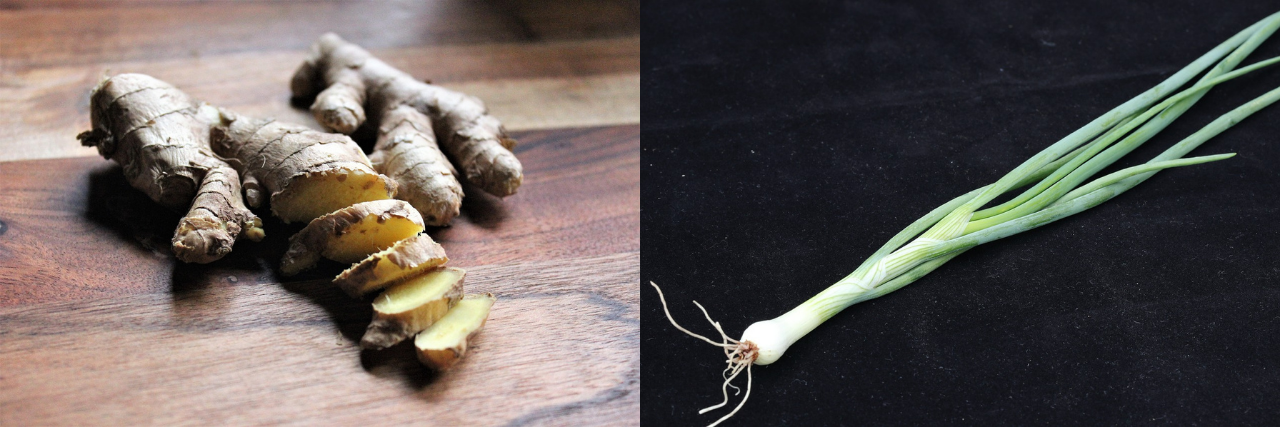
This tea is for the initial stages of an upper respiratory infection. Ideally, it is taken when you first have that feeling of, “uh oh, am I about to get sick?” as this is an interoceptive signal from your body telling you something is off. It can also be effective when symptoms first appear, even in the presence of a mild fever. Once symptoms are severe, or a fever is high, this formula will likely be ineffective as stronger medicine is needed.
Recipe
Ingredients:
Scallion bulbs 3 whole pieces (the white and light green parts, including the roots)
Fresh ginger 3 thin slices (thickness of a quarter)
Water 1.5 cups (about 12 ounces)
Preparation Steps:
Chop & slice ingredients: Roughly chop the white bulbs and roots of 3 scallions. Slice off 3 pieces of fresh ginger.
Combine: Place the chopped scallions, ginger slices, and 1.5 cups of water into a small, non-reactive pot, covered.
Boil & simmer: Bring the mixture to a rapid boil, then immediately turn the heat down to a gentle simmer.
Decoct: Simmer for 3 to 5 minutes. Do not cook longer, as the delicate active ingredients will evaporate.
Strain and drink: Strain the liquid into a mug. Drink the entire warm liquid immediately.
Timing and Usage:
When to take: Take this decoction as soon as you suspect you are getting sick, or as the first symptoms of an upper respiratory infection appear (if they are mild).
Purpose: The warm, acrid nature of this tea pushes the Wind-Cold out of your body before it has a chance to engage strongly with your defensive qi. You might experience a mild sweat, warming of the skin, or moistening of the skin; this is ideal.
Follow-Up: If you don’t feel back to normal, or feel that external symptoms (runny nose, sneezing, scratchy throat, post nasal drip, etc…) have not fully cleared by the end of the day or the following morning, prepare and take this decoction one more time. If your symptoms worsen, seek the care of a medical professional.
Research
Many studies have been done on the pharmacological properties of common herbs and spices found in home kitchens. Ginger and scallion (aka green onion) are among them and have a host of benefits.
In the case above, ginger and scallion were used together to treat the very early stages of an acute upper respiratory infection. From a Chinese medicine perspective, they are both warm and acrid, which mobilizes the body's defensive qi to open pores, stimulate sweating, and thrust out invading pathogens before they can put up a real fight. From a pharmacological perspective, they both have unique properties that when combined pack a powerful punch to knock viruses out before they even have a chance.
This study showed that fresh ginger, in a dose dependent manner, could inhibit the formation of viral plaques, viral attachment, and internalization. It also showed that in high concentrations, fresh ginger could stimulate mucosal cells to produce IFN-β (interferon beta), an immune system protein (cytokine) known to interfere with viral replication.
This study showed that scallion (aka Welsch onion) acts as an immunostimulant and a broad-spectrum anti-viral agent. A mucus extract from the green leaves was able to increase production of TNF-α (tumor necrosis factor alpha), MCP-1 (monocyte chemotactic protein-1) and IL-12 (interleukin 12); it also increased the TNF-α, IL-12 and phagocytotic activity in peritoneal cells, and IFN-γ (LPS-interferon-γ) production in spleen cells, and increased the activity of natural killer cells. A water-based extract was able to decrease viral replication in the lungs and increased the presence of neutralizing antibodies.